The moment you hit “publish” on your first blog post, you technically become a publisher. Most bloggers never think about that. I didn’t either, until I started digging into what happens legally when a blog post — a completely well-intentioned one — ends up on the wrong side of a reader, a brand, or a competitor.
Turns out, “just a hobby blog” and “a business with real liability” aren’t as far apart as they sound.
This isn’t legal or financial advice — just a plain-language look at what business insurance for bloggers actually involves, based on what insurers, agents, and bloggers who’ve been through it have to say.
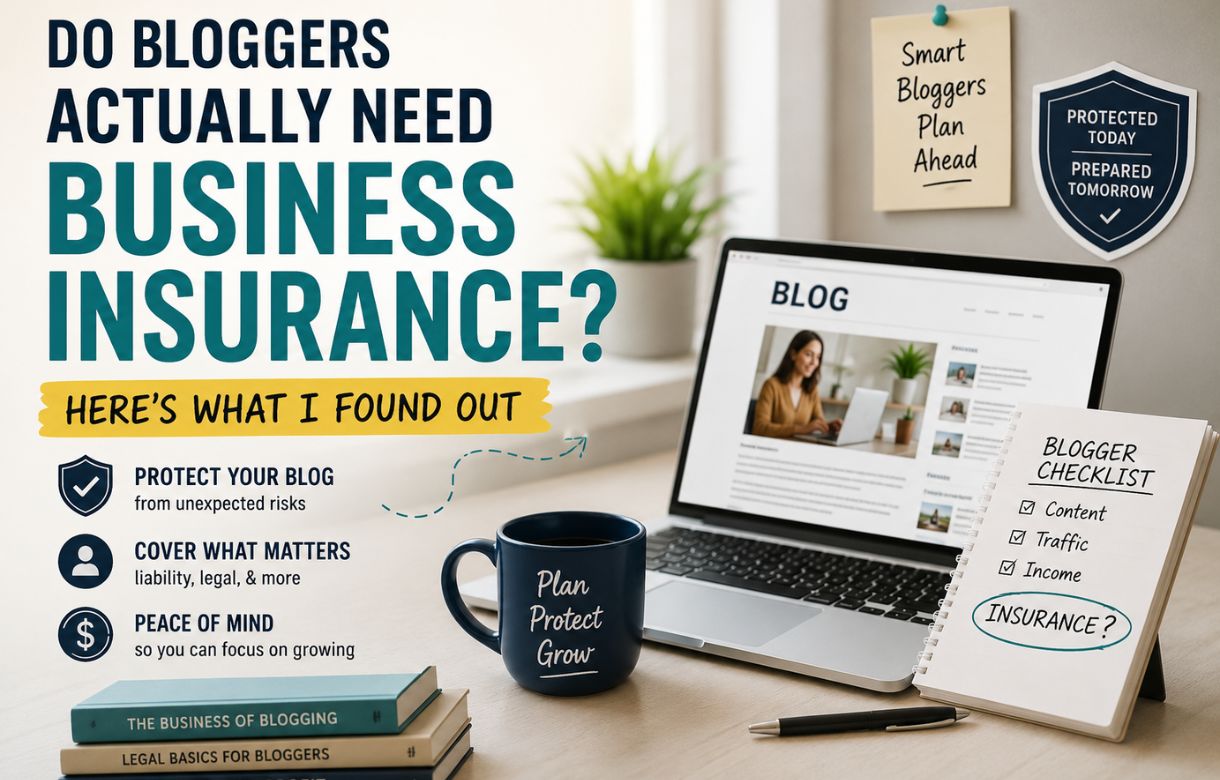
Do bloggers actually need business insurance?
Legally? In most cases, no. There’s no law requiring a solo blogger to carry business insurance, the same way there’s no law requiring a freelance writer to carry it either.
Practically? That’s a different question. If your blog earns money — through ads, affiliate links, sponsored posts, or your own products — you’re running a business, whether or not it feels like one. And businesses get sued. Bloggers get sued for things you wouldn’t expect: a negative review that a brand calls defamatory, a product recommendation that goes wrong for a reader, a photo used without proper licensing, a guest interview where someone trips over a cable in your home office.
None of that requires malice. It just requires the wrong reader, or the wrong brand, having a bad day and a lawyer on retainer.
What does blogger insurance actually cover?
Most bloggers who do get coverage end up with some combination of two policies, often bundled together:
- General liability insurance — covers third-party bodily injury or property damage. Think: someone gets hurt during an in-person interview at your house, or you accidentally damage someone else’s equipment while filming content.
- Professional liability insurance (also called media liability or errors & omissions) — this is the one that matters more for most bloggers. It covers legal defense costs if you’re accused of libel, copyright infringement, or giving advice that someone claims caused them financial harm.
Some bloggers also add cyber liability insurance if they store reader data (email lists, for instance), and commercial property insurance if they’ve got expensive gear — cameras, laptops, lighting setups — that would hurt to replace out of pocket.
Key Facts
Blogger Business Insurance
Legal requirement
Not mandatory for solo bloggers
*Cost varies by location, coverage limits, and provider. Get quotes to confirm actual pricing — this isn’t insurance or legal advice.
How much does blogger insurance cost?
This is where it gets genuinely hard to give a clean number, and I’d be lying if I said otherwise — cost varies a lot based on your location, your niche, whether you have employees, and how much coverage you choose.
That said, a rough pattern shows up across insurers and blogger accounts of their own policies: solo bloggers with general liability coverage tend to land somewhere in the low hundreds of dollars per year, with professional liability sometimes running similarly or a bit higher depending on the provider. Bundled policies (a Business Owner’s Policy, or BOP) are usually the cheaper route if you want both types of coverage.
Your best move if you’re actually considering this isn’t to trust a generic number online — it’s to get a couple of quotes and compare, since providers price bloggers very differently. A few blogger accounts even mention getting flatly turned down by insurers who don’t want to cover “internet publishing” at all, which says something about how new this corner of the insurance industry still is.
Is it worth it for a small or new blog?
Honestly? For a brand-new blog with a handful of readers and no income yet, probably not urgent. The math changes as three things grow: your traffic, your income, and how much of your content involves other people — interviews, guest posts, product reviews, brand partnerships.
The riskiest spot to be in isn’t the tiny hobby blog or the huge established one. It’s the blog that’s grown just enough to look like a real business to an outside lawyer, but hasn’t built in any of the protections a real business usually has.
What happens if you skip it and something goes wrong?
Best case, nothing ever does. Plenty of bloggers run for years without a single legal issue. Worst case, you’re covering legal defense costs entirely out of pocket — and even a baseless claim can rack up real legal fees before it gets dismissed. That’s the actual argument for insurance: it’s not that a claim is likely, it’s that the downside if one happens is disproportionate to what most bloggers can absorb.
FAQs
Is business insurance legally required for bloggers?
No, not in most cases. It becomes a legal requirement mainly if you hire employees, since workers’ compensation insurance is typically mandated by state law at that point.
What’s the difference between general liability and professional liability insurance for bloggers?
General liability covers physical incidents — injury or property damage. Professional liability covers claims related to your actual content, like libel or copyright disputes.
Does homeowner’s insurance cover blogging business risks?
Usually not. Most personal home insurance policies exclude business activity, even if you’re working from home, which is part of why bloggers end up needing separate business coverage.
Can a blogger get insurance if they’re not incorporated as an LLC?
Yes. Many providers offer coverage to sole proprietors, though setting up an LLC is a separate step some bloggers take alongside insurance for added personal liability protection.