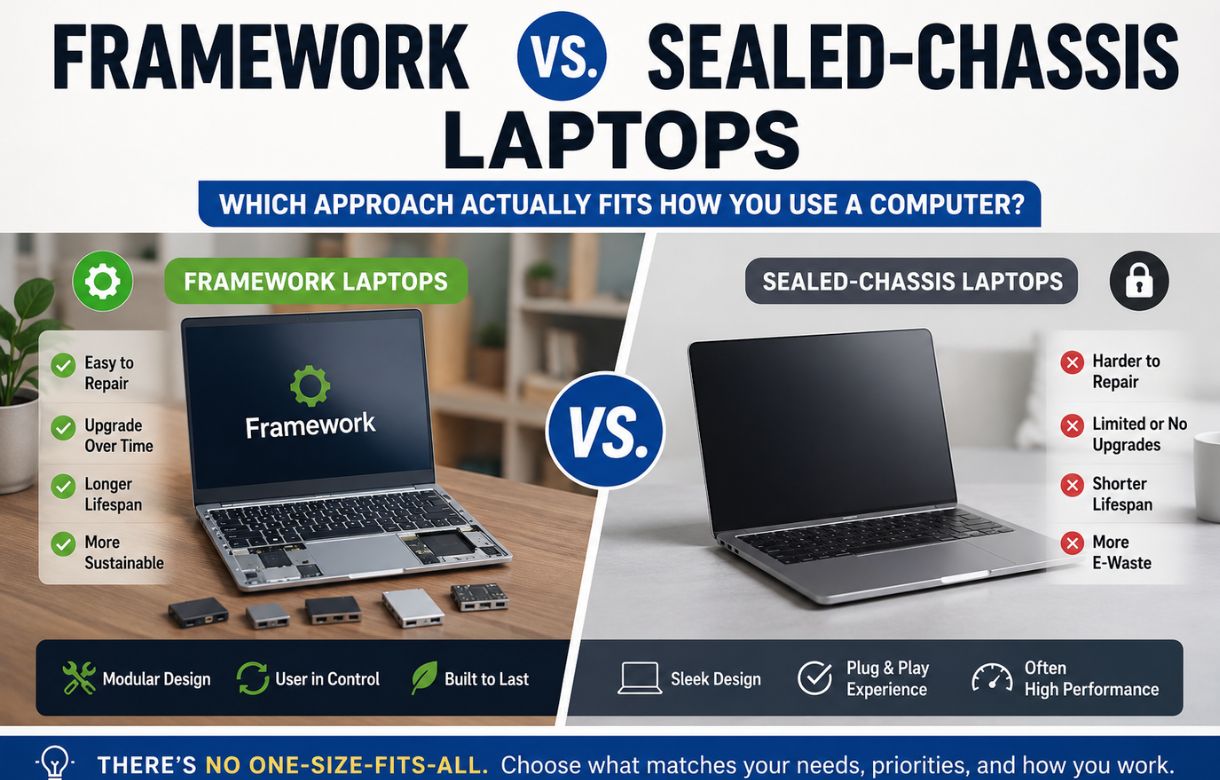
For years, Framework’s pitch was simple and a little unglamorous: buy a laptop you can actually fix. Swap the battery yourself. Upgrade the RAM without a screwdriver set from a hardware store. Keep the same machine running for a decade instead of replacing it every three years because one port died.
It was a good idea. It just didn’t always feel like a premium product next to the machines it was competing with.
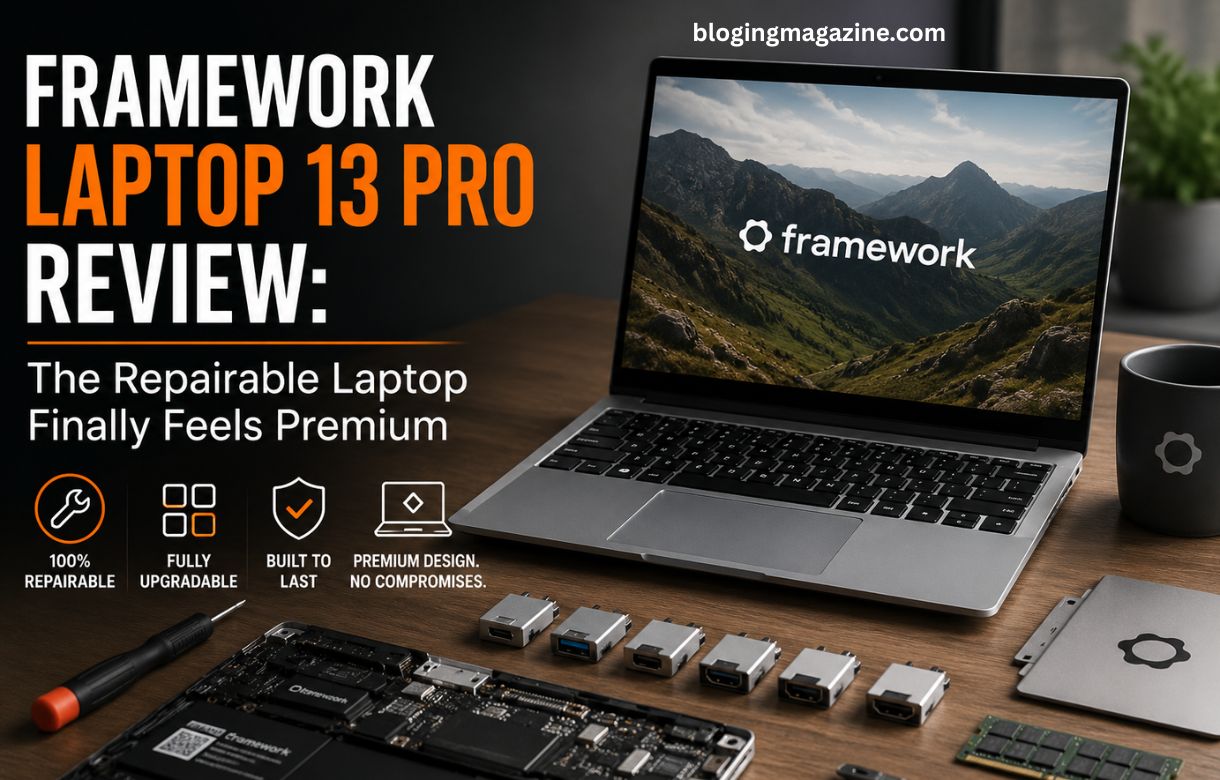
That changed in April 2026, when Framework unveiled the Laptop 13 Pro at its Next Gen Event — and, for the first time, reviewers weren’t just praising the concept. They were praising the laptop.
What’s Actually New Here
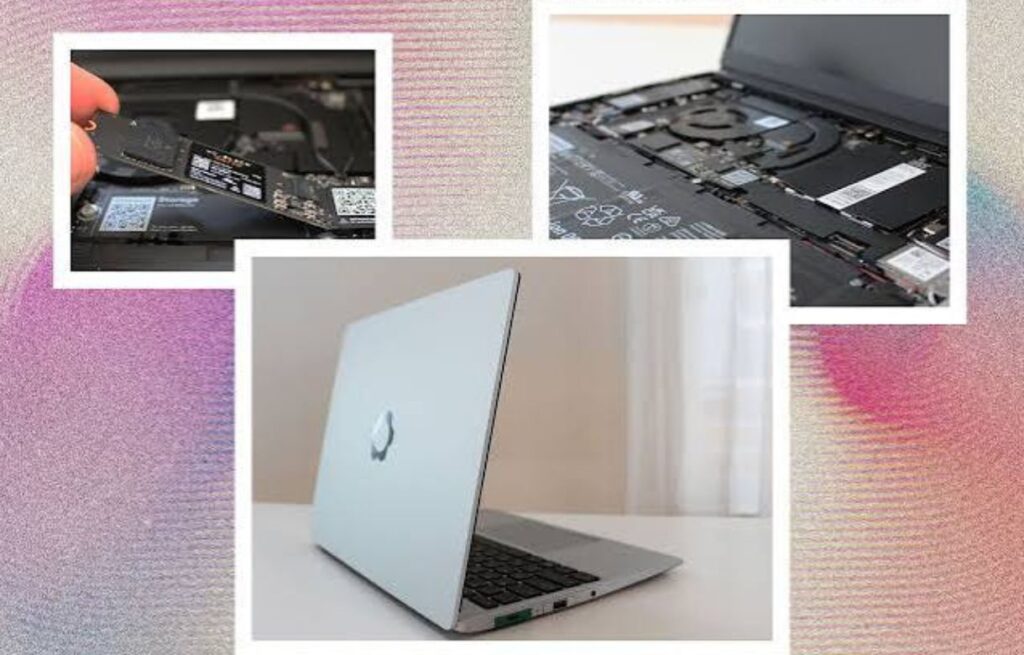
The headline change is the body. The framework moved away from the mixed-material build of earlier models and machined the new chassis from a solid block of 6000-series aluminum, finished in a graphite tone. It weighs in at roughly 1.4 kilograms and stays under 16 millimeters thick, which puts it in the same conversation as laptops that were never designed to be opened up.
That’s the part worth sitting with for a second. Framework didn’t sand down the repairability to get a nicer shell. The modular guts are still there — you can still swap the mainboard, the memory, the storage, even individual ports through the Expansion Card system. They just finally figured out how to wrap all of that in something that doesn’t look and feel like a kit car.
Under the hood, the 13 Pro runs on Intel’s Core Ultra Series 3 (Panther Lake) chips, with options ranging from the Core Ultra 5 325 up to the Core Ultra X9 388H. The higher-tier configurations pair with Intel Arc B390 graphics, while the base model sticks with integrated Xe3.
Memory is where things get genuinely interesting for a laptop this size. Framework switched to LPCAMM2 modules, which sounds like a small technical detail until you realize what it means in practice: you get soldered-laptop speeds — up to 64GB of LPDDR5X running at 7467 MT/s — without the memory actually being soldered down. Most thin-and-light machines at this performance tier lock you in permanently. This one doesn’t.
Display and Everyday Feel
The 13.5-inch panel keeps Framework’s signature 3:2 aspect ratio, which is quietly one of the best decisions a productivity laptop can make — more vertical space for documents, code, and browser tabs, less awkward scrolling. Resolution lands at 2880×1920, brightness peaks around 700 nits, and the refresh rate is now variable between 30Hz and 120Hz. For the first time on a Framework 13-inch, there’s integrated touch support built into the panel itself.
The input side got a real upgrade, too. There’s a new haptic touchpad — no physical click mechanism to wear out over time, just consistent feedback across the entire surface — and a redesigned keyboard with 1.5mm of key travel. On the audio side, Intel configurations get Dolby Atmos tuning, though early hands-on coverage from PCWorld noted the speakers didn’t quite live up to the spec sheet in initial demo units. Worth watching for in fuller reviews once more units are in circulation.
Battery Life: The Number That Matters
Framework is claiming up to 20 hours of battery life, tested under 4K Netflix streaming at 250 nits and 60Hz. That figure comes from a 74Wh battery — about a 21-22% capacity jump over the previous generation — combined with the efficiency gains of the new Panther Lake chips.
Real-world use rarely matches a manufacturer’s best-case test conditions exactly, and full independent battery benchmarks are still rolling in as more units ship. But even accounting for some real-world drop-off, this is a meaningful jump from where Framework’s 13-inch line used to sit, and it closes a gap that used to be a genuine weakness against sealed ultrabooks.
The Linux Story Is Bigger Than It Looks
Here’s the detail that’s generating the most buzz in tech circles, and it’s not really about specs at all.
The Laptop 13 Pro is Framework’s first Ubuntu Certified system — not just “compatible if you tinker,” but officially tested and endorsed by Canonical. Firmware updates flow through the Linux Vendor Firmware Service, so there’s no separate Windows-only tool required to keep the system current. Framework has also been contributing patches upstream to the Linux kernel itself.
The result: according to data Framework shared publicly in late April 2026, pre-built Ubuntu configurations have been outselling pre-built Windows configurations. That’s a genuinely unusual data point in consumer laptops — Linux typically sits in the low single digits of market share almost everywhere except among Framework’s specific, technical customer base. It’s a strong signal of exactly who this machine is being built for.
Beyond Ubuntu, Framework is also seeding support for Fedora, Bazzite, NixOS, CachyOS, and Linux Mint.
Pricing and Availability
The DIY Edition starts at $1,199, with the pre-built version starting at $1,499. Framework began shipping the first units in June 2026, though demand has reportedly pushed some later orders into August.
If you already own an earlier Framework Laptop 13, there’s good news: the new chassis, display, and Pro Input Cover Kit are all backward compatible with older mainboards. You don’t have to buy a whole new machine to get most of what’s new here — you can upgrade in pieces, which is precisely the promise Framework has been making since day one.
Framework Laptop 13 Pro — Key Facts
Announced April 21, 2026 · Shipping since June 2026
Is It Worth It?
The Laptop 13 Pro doesn’t reinvent what Framework does. It doesn’t need to. What it does is quietly fix almost everything that used to make the modular pitch feel like a compromise — the chassis feels solid now instead of utilitarian, the battery finally competes instead of apologizing, and the Linux support isn’t an afterthought bolted onto a Windows-first machine.
If you’ve been curious about Framework but held off because earlier models felt more like a hobbyist statement than a daily driver, this is the version that closes that gap. And if you’re already inside the ecosystem, the backward-compatible upgrade path means you don’t have to start over to get most of the benefit.
It’s not the laptop for everyone. If you want the thinnest possible machine with zero interest in ever opening it up, sealed ultrabooks will still win on pure industrial design. But for anyone who’s ever been frustrated watching a perfectly good laptop become e-waste because one component failed, the 13 Pro is the strongest argument Framework has made yet.
You should consider the Framework Laptop 13 Pro if:
- You want a laptop you can genuinely repair and upgrade for years, instead of replacing it
- You’re on Linux, or curious about it— the Ubuntu certification here is a real, tested commitment
- You already own an earlier Framework 13 and want most of the upgrade without buying a whole new machine
You should skip it if:
- You want the thinnest, lightest machine on the market and don’t care about repairability
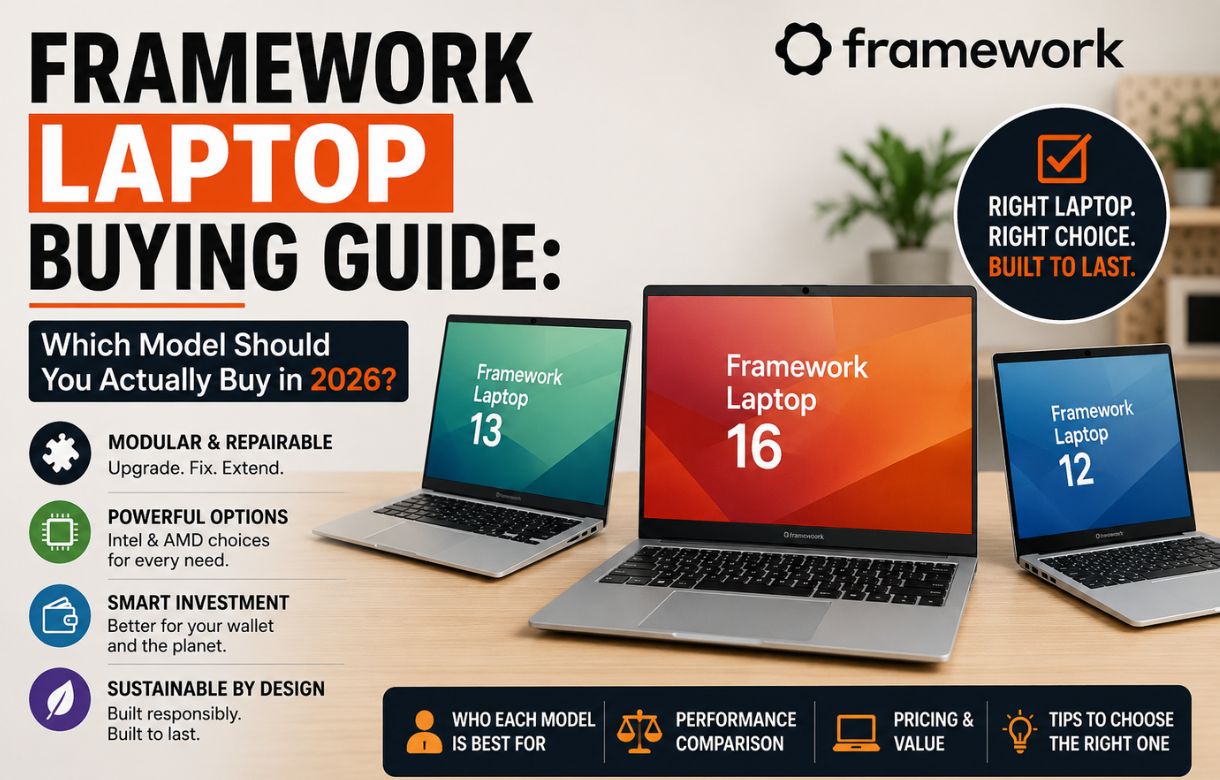
- You need serious dedicated graphics performance — the Laptop 16 is the better fit
- You’re chasing rock-bottom pricing over long-term flexibility
Frequently Asked Questions
Is the Framework Laptop 13 Pro good for gaming?
Not really its focus. The Intel Arc B390 graphics on higher configurations can handle lighter titles and creative workloads, but this isn’t built to compete with dedicated gaming laptops — for that, Framework’s Laptop 16 with its upgradeable graphics module is the better fit.
Can I upgrade my older Framework Laptop 13 to the Pro version?
Yes, partially. The new chassis, display, and Pro Input Cover Kit are sold separately and are compatible with earlier Framework Laptop 13 mainboards, so existing owners can upgrade without buying an entirely new machine.
Does the Framework Laptop 13 Pro support Windows as well as Linux?
Yes. It ships with Windows 11 pre-installed on pre-built configurations, alongside Ubuntu-certified options. DIY Edition buyers can install the OS of their choice.
How much RAM and storage can the Framework Laptop 13 Pro support?
Up to 64GB of LPCAMM2 LPDDR5X memory and up to 8 TB of PCIe Gen 5.0 NVMe storage.
When did the Framework Laptop 13 Pro launch?
It was announced on April 21, 2026, at Framework’s Next Gen Event, with first units shipping in June 2026.