I used to treat every new backlink like a win. Someone linked to my site, so that’s good, right? Add it to the mental tally and move on.
It took a few link-building campaigns that produced nothing but a bigger backlink count and zero movement in rankings to realize that’s the wrong way to think about it. A backlink isn’t automatically valuable just because it exists. Some links do real work. Others sit there doing absolutely nothing, and a few can actively work against you.
Here’s how I actually evaluate whether a backlink is helping, instead of just assuming it is.
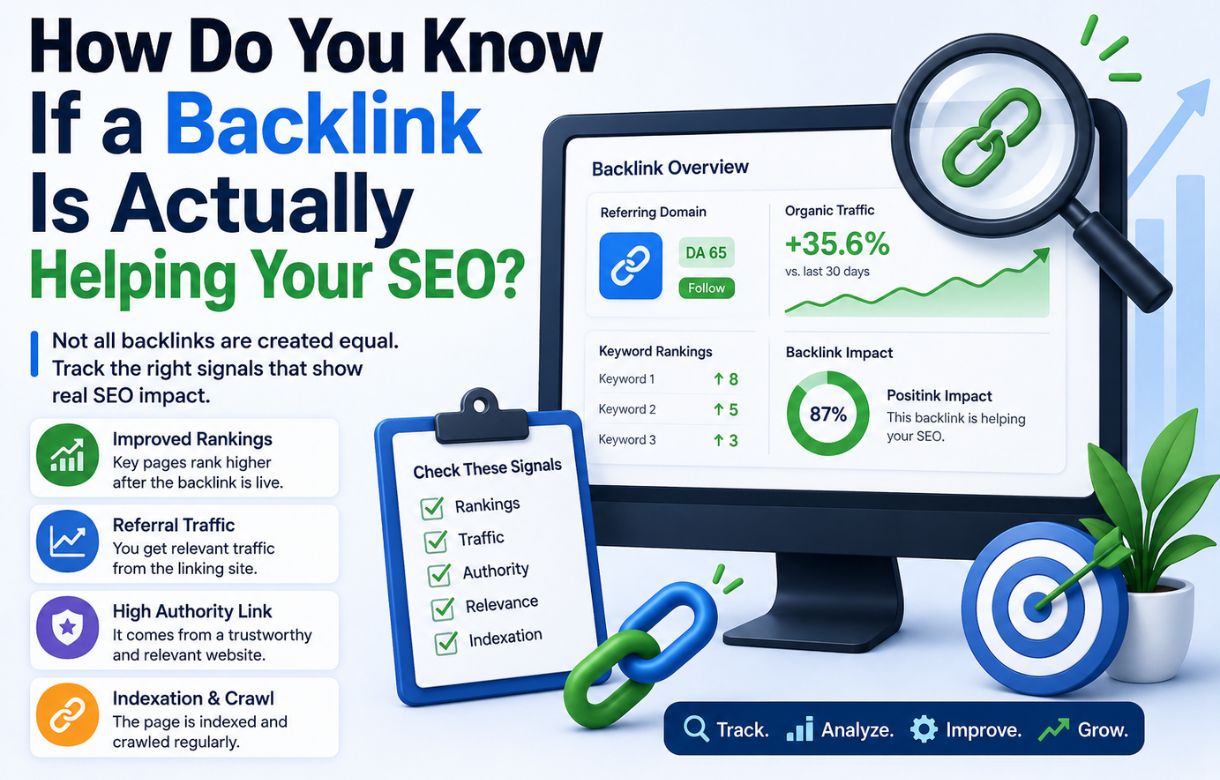
Is the linking page even indexed?
This is the first thing I check, and it’s the one most people skip entirely. If the page linking to you isn’t indexed by Google, it can’t pass any authority to you, no matter how relevant or well-written that page is. It functionally doesn’t exist as far as search is concerned.
I search site: plus the exact linking URL to confirm it’s actually in Google’s index. If it’s not showing up, the backlink might as well be sitting in a document nobody will ever read.
Is the link sending any real traffic?
A backlink that never gets clicked isn’t necessarily worthless for SEO, but it’s a weaker signal than one that’s clearly driving people to your site. If you check your referral traffic in analytics and a link has sent zero visitors in over a year, that tells you something about how much real editorial weight that placement actually carries.
Links buried in footers, resource dumps, or old directory pages tend to fall into this category. Links placed naturally within relevant, actively-read content tend to send at least some traffic, even if it’s modest.
Did rankings move for the specific page the link points to?
This is the part people get wrong most often. They see a new backlink appear, then check their overall domain traffic a week later and either credit the link for an unrelated bump or dismiss it because nothing changed site-wide.
Instead, look specifically at the page the backlink points to. Check its rankings and impressions in Search Console before and after the link went live, ideally isolating that change from anything else you did around the same time, like on-page edits or new content elsewhere on the site. If that specific page’s visibility improved and nothing else changed, that’s a much cleaner signal than looking at the site as a whole.
Is the link relevant, or just present?
A backlink from a site in your niche, placed in content that’s actually about your topic, tends to carry more weight than a link from an unrelated site that just happened to mention you in passing. Search engines have gotten better at weighing context and relevance, not just raw link count.
If your blog is about digital marketing and a backlink comes from a gardening forum’s random resource page, that link exists, but it’s not doing the same job as a mention from a marketing publication covering the same topic you wrote about.
Backlink quality vs backlink quantity
This is where a lot of early link-building strategy goes wrong. Ten backlinks from low-authority, unrelated, or spammy sites are not better than two backlinks from relevant, well-indexed, genuinely read pages. In some cases, a large volume of low-quality links can actively hurt you if it starts to look like a manipulative pattern rather than organic growth.
I’d rather have one link from a site that’s clearly respected in the niche than a dozen from directories nobody visits. Quantity is easy to chase and easy to fake. Quality is what actually correlates with ranking movement, and it’s also what protects you from the next point.
Could this backlink actually be hurting you?
Not every backlink is neutral-at-worst. Links from spammy link farms, PBNs (private blog networks), or sites with a pattern of manipulative link schemes can trigger algorithmic distrust, and in some cases, manual penalties. This is especially relevant if you’ve ever paid for links, done a guest post exchange without vetting the site, or inherited old backlinks from a previous version of your site.
I periodically check my backlink profile for exactly this kind of pattern, and if I find something that looks toxic, I’ll disavow it rather than assume it’s harmless just because it’s not actively causing a visible problem yet.
The pattern here
A backlink is a signal, not a guarantee. The mistake is treating link acquisition as a numbers game instead of asking whether each individual link is indexed, relevant, sending traffic, and correlated with actual ranking movement on the specific page it points to. Once you start evaluating links this way, you’ll probably find that a handful of your backlinks are doing all the real work, and a lot of the rest are just sitting there.
FAQ
What are the signs a backlink is actually working?
The clearest signs are consistent referral traffic, indexed status of the linking page, and a measurable ranking or impression increase for the specific page the link points to, ideally isolated from other changes you made around the same time
Does the number of backlinks matter for SEO?
Not as much as their quality and relevance. A small number of backlinks from indexed, relevant, well-regarded sites tends to outperform a large volume of low-quality or unrelated links.
Can a backlink hurt my SEO instead of helping it?
Yes. Links from spammy networks, link farms, or manipulative schemes can trigger algorithmic distrust or manual penalties. Reviewing your backlink profile periodically and disavowing toxic links when necessary is part of protecting your rankings, not just building them.
How do I check if a specific backlink helped my rankings?
Look at Search Console data for the exact page the backlink points to, comparing rankings and impressions before and after the link went live, while accounting for any other changes made to that page around the same time.