For a long time I treated off-page SEO as one thing: get backlinks. Any backlinks. As many as I could talk, trade, or beg my way into.
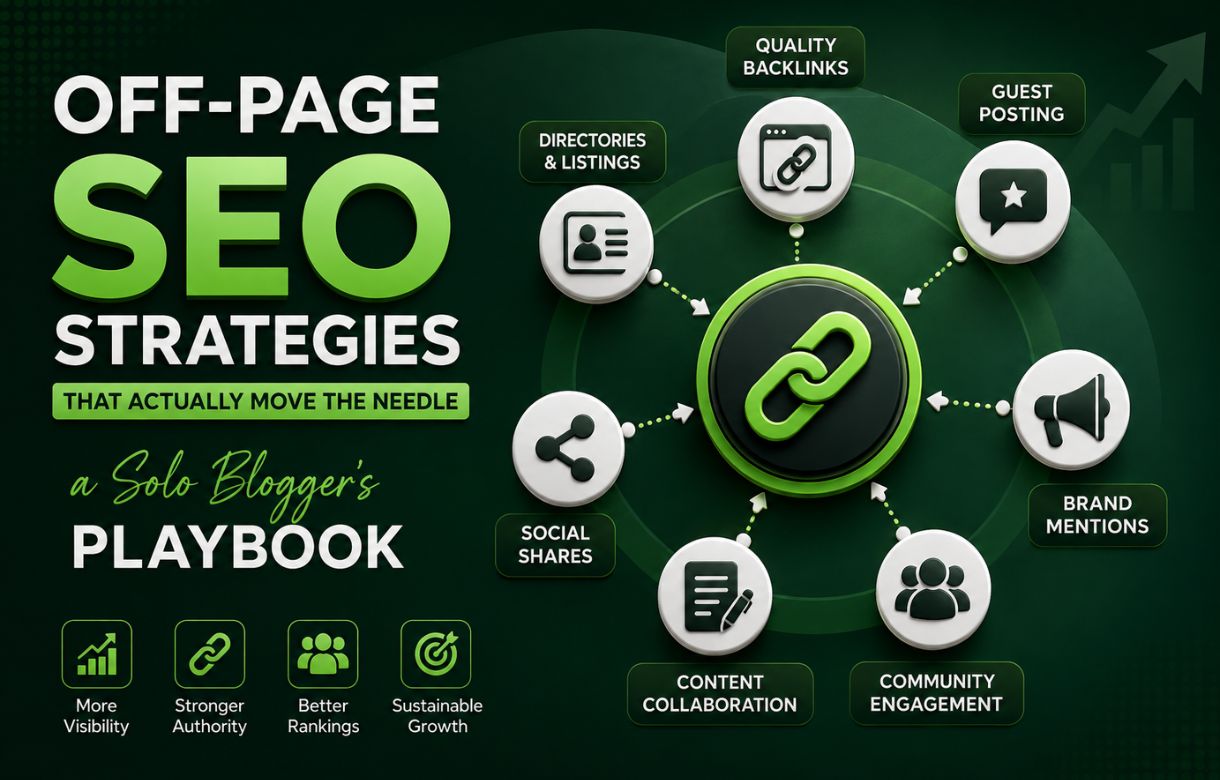
That’s not wrong, exactly. It’s just incomplete in a way that wastes a lot of a solo blogger’s limited time. Off-page SEO is everything that happens away from your own pages that still affects how search engines trust and rank you — links, yes, but also mentions, digital PR, and the consistency of how you show up across the web. Some of it moves rankings directly. Some of it just makes the direct stuff work better.
Here’s how I actually think about it now, after a few campaigns that generated a bigger backlink count and nothing else.
What Is Off-Page SEO, Really?
On-page SEO is everything on the page itself that helps Google and a reader understand what it’s about. Off-page is the opposite direction: what other pages, other sites, and other people say about you, and whether that adds up to something search engines can trust.
For a solo blogger, this matters more than it might for a bigger brand, not less. A large publication has decades of accumulated trust sitting in the background of everything it publishes. A new site run by one person doesn’t have that cushion. Every backlink, every mention, every signal that says “this is a real, credible source” is doing more relative work for you than it would for a site with an established name behind it.
Off-page SEO also isn’t a separate track from the rest of your SEO work. It’s one leg of a bigger structure — content, code-level technical health, and off-page signals all feed the same outcome, which is roughly what the SEO periodic table was trying to organize before AI Overviews and entity SEO complicated the picture. Off-page still maps cleanly onto that “links and credibility” portion of the framework. It’s a floor, not the whole building.
Link Building — The Core of Off-Page SEO
Link building is the part of off-page SEO everyone thinks about first, and for good reason — it’s still the clearest trust signal search engines use. But “build links” isn’t a strategy on its own. The strategy is in how you evaluate what you’re building, and whether you’re doing it yourself or paying someone else to.
Why Are SEO Link Building Services Important?
They’re important in the sense that link building is genuinely time-consuming, and a service can save you hours you’d otherwise spend on outreach, vetting, and follow-ups. That’s the honest case for them.
The dishonest case — the one a lot of these services actually sell — is the promise of fast, guaranteed link volume. That’s the version worth being skeptical of. If a service is offering you fifty backlinks a month at a flat rate, ask where those links are actually coming from. Often it’s private blog networks, link farms, or low-effort guest post mills that exist purely to sell placements. Google has gotten considerably better at recognizing that pattern, and links from that kind of source can range from useless to actively harmful.
A legitimate link building service should be able to tell you, specifically, what kind of sites they’re pitching, what their outreach process looks like, and why a particular site makes sense for your niche. If they can’t answer that without vague language about “authority” and “DA,” that’s the tell.
For a solo blogger with more time than budget, doing it yourself — slower, but with full visibility into where every link actually comes from — is usually the safer trade. That’s what pushed me toward guest post pitching directly, rather than outsourcing the relationship entirely.
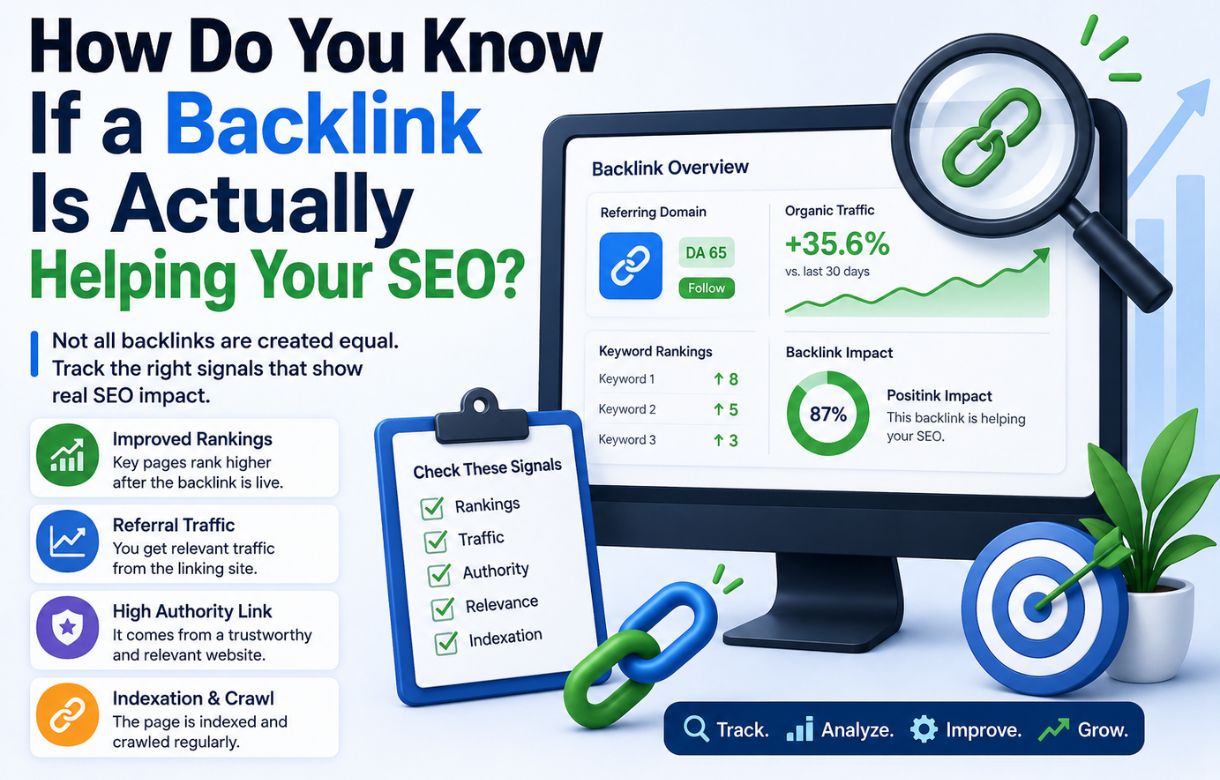
How Do You Know If a Backlink Is Actually Helping Your SEO?
This is the question that actually matters more than “how many links do I have.” I’ve written about this in detail — checking whether a specific backlink is indexed, sending traffic, and correlating with a ranking change on the exact page it points to — because most people never get past “someone linked to me, that’s good” and stop there.
The short version: a link that isn’t indexed can’t pass anything. A link buried in a footer that’s never clicked is a weaker signal than one placed naturally in content someone’s actually reading. And a handful of relevant, well-indexed links usually outperforms a pile of unrelated ones, sometimes by a wide margin.
What’s the Difference Between Guest Posting and Buying Links?
On the surface, both get you a link on someone else’s site. The difference is in what you’re actually exchanging.
Guest posting is an editorial relationship. You pitch a site a piece of content that’s genuinely useful to their audience, they publish it because it’s worth publishing, and a link back to your site is a reasonable, disclosed part of that exchange. The site’s editor is making a judgment call about quality, and that judgment is part of what makes the link mean something.
Buying links skips that judgment entirely. Money changes hands, a link appears, and there’s no editorial reason it exists beyond the payment. Google’s guidelines treat this as a violation for a reason — it’s the difference between earning a recommendation and paying for one, and search engines are trying to reward the former.
In practice, the line gets blurry. Sponsored content, paid guest posts with nofollow links, and paid placements that are properly disclosed all sit somewhere in between. When I’ve reached out for guest post opportunities — pitching sites like Buddymantra directly rather than going through a paid service — the goal has been to keep the exchange editorial: here’s a piece worth publishing, not here’s a payment for a placement.
Does Technical Health Affect Your Off-Page Results?
Yes, in a way that’s easy to overlook. Off-page signals point at a destination, and if that destination has problems, the link isn’t doing its job as well as it could.
If the page a backlink points to has technical issues that hurt rankings — slow load times, crawl errors, broken internal links — you’re asking an external trust signal to compensate for something a search engine can already see is wrong on your end. Off-page work earns you credibility. Technical health is what lets Google actually act on that credibility once it’s earned.
This is part of why off-page shouldn’t be the first thing a new site focuses on. Get the foundation stable first, then let outside signals build on top of it.
Digital PR and Brand Mentions
Links aren’t the only off-page signal that matters. Brand mentions — being talked about, even without a clickable link back to you — still carry weight, both as a trust signal and as a way to get in front of an audience that hasn’t found you yet.
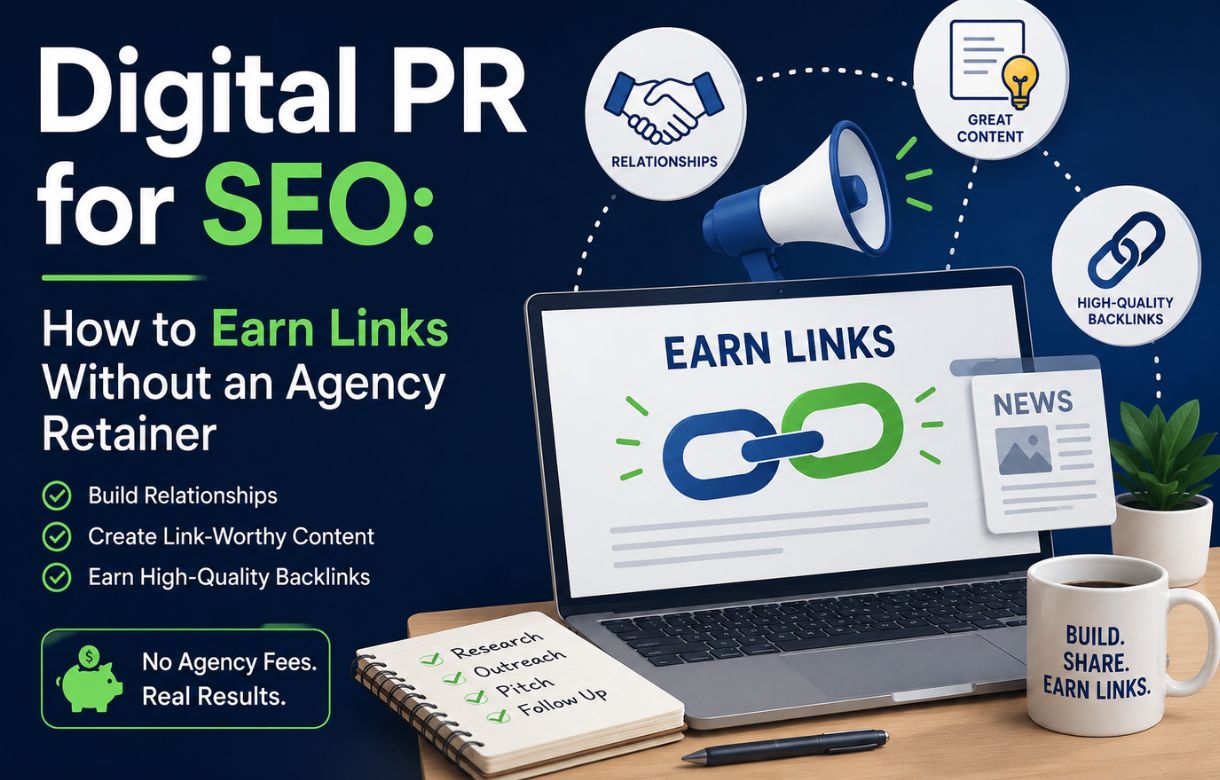
Digital PR is the more deliberate version of this: pitching journalists, contributing expert commentary, and getting cited as a source in coverage that already has an audience and existing authority. It doesn’t require an agency retainer. It requires being genuinely useful to someone writing about a topic you actually know something about, and being findable when they’re looking for a source.
An unlinked mention of your name, your site, or your brand still tells search engines something, even without the link. Entity-based ranking increasingly cares about whether the web agrees you exist and are credible — consistent, cited, recognizable — independent of any single hyperlink pointing at you.
Where Off-Page Fits in the Bigger Picture
Off-page SEO is not where a beginner should start. If you’re new, get your Search Console set up, do narrow keyword research, and fix your on-page structure first — those are the things you control completely and can iterate on quickly. Off-page depends on other people’s decisions, which makes it slower and less predictable, and it’s more effective once you actually have something worth linking to.
Once you’ve got content live and holding steady rankings, off-page becomes the layer that helps you compete for the more contested terms your on-page work alone won’t win. It’s not a replacement for content and technical fundamentals. It’s what you add once those fundamentals are in place.
Common Off-Page Mistakes to Avoid
Chasing volume over relevance. Ten links from unrelated, low-authority sites do less for you than two links from sites that are actually in your niche and actively read.
Over-optimized anchor text. If every backlink to your site uses the exact same keyword-stuffed anchor text, that pattern looks manufactured, because it usually is. Natural link profiles have varied, sometimes branded, sometimes generic anchor text.
Ignoring your existing backlink profile. Links you didn’t build yourself — inherited from a previous version of your site, or picked up through spammy guest post exchanges you didn’t vet — can sit there quietly hurting you. Check periodically, and disavow anything that looks like a manipulative pattern.
Treating buying links as a shortcut. It’s not a shortcut. It’s a risk with a delayed cost, and the delay is exactly what makes it tempting.
Skipping the “is this actually helping” check. Building links and never checking whether they’re indexed, sending traffic, or correlating with ranking movement means you’re optimizing for a number instead of an outcome.
Key Facts
Off-Page SEO, at a Glance
Off-page is trust built elsewhere
It covers everything outside your own pages — links, mentions, and digital PR — that signals credibility back to search engines.
Quality beats quantity, consistently
A handful of relevant, well-indexed backlinks from actively-read sites outperforms a large pile of unrelated or low-authority ones.
Guest posting ≠ buying links
Guest posting is an editorial exchange judged on merit. Buying links skips that judgment entirely, which is why search engines treat it differently.
Link services aren’t inherently risky
The risk is in vague, high-volume promises. A legitimate service can explain exactly which sites they pitch and why.
Unlinked mentions still count
Brand mentions without a clickable link still contribute to entity-based trust signals, independent of any single backlink.
Off-page amplifies, it doesn’t replace
It works best layered on top of solid on-page and technical fundamentals — not as a substitute for either.
Source: Blogging Magazine — Off-Page SEO Strategies
FAQ
Why are SEO link building services important?
They can save time on outreach and vetting, which is genuinely valuable. The risk is services that promise fast, high-volume links without transparency about where those links come from — that pattern usually points to low-quality sources like PBNs or link farms, which can do more harm than good.
What’s the fastest way to start building backlinks as a solo blogger?
Guest posting on sites in your niche, done through direct, editorial pitches rather than paid placement services. It’s slower than buying links, but every link you get this way is one you can actually vet.
Does off-page SEO matter if my on-page content isn’t ranking yet?
Not much, initially. Off-page signals amplify content that’s already solid. If your on-page fundamentals aren’t in place, off-page work is reinforcing a weak foundation
How many backlinks do I actually need to rank?
There’s no fixed number. A handful of relevant, well-indexed backlinks from sites that are actually read tends to outperform a much larger pile of low-quality ones. Quality and relevance matter more than raw count.
Can bad backlinks hurt my rankings?
Yes. Links from spammy networks or manipulative link schemes can trigger algorithmic distrust or manual penalties. Reviewing your backlink profile periodically and disavowing anything toxic is part of protecting the off-page work you’ve already done.