Every “Rank Math vs Yoast” post I read before writing this one felt like it was pulled straight from each plugin’s own marketing page. Feature checklists, no real opinions, no mention of what actually changes day-to-day once you’re using one of these on a real site.
I’ve run both. This is what I actually noticed switching between them, not a spec sheet.
This post is part of my WordPress Tools for Bloggers series. If you want the full settings breakdown for either plugin individually, I’ve got dedicated guides: Rank Math Settings Guide and my Yoast SEO settings guide (coming soon).
What’s the Real Difference Between Rank Math and Yoast?
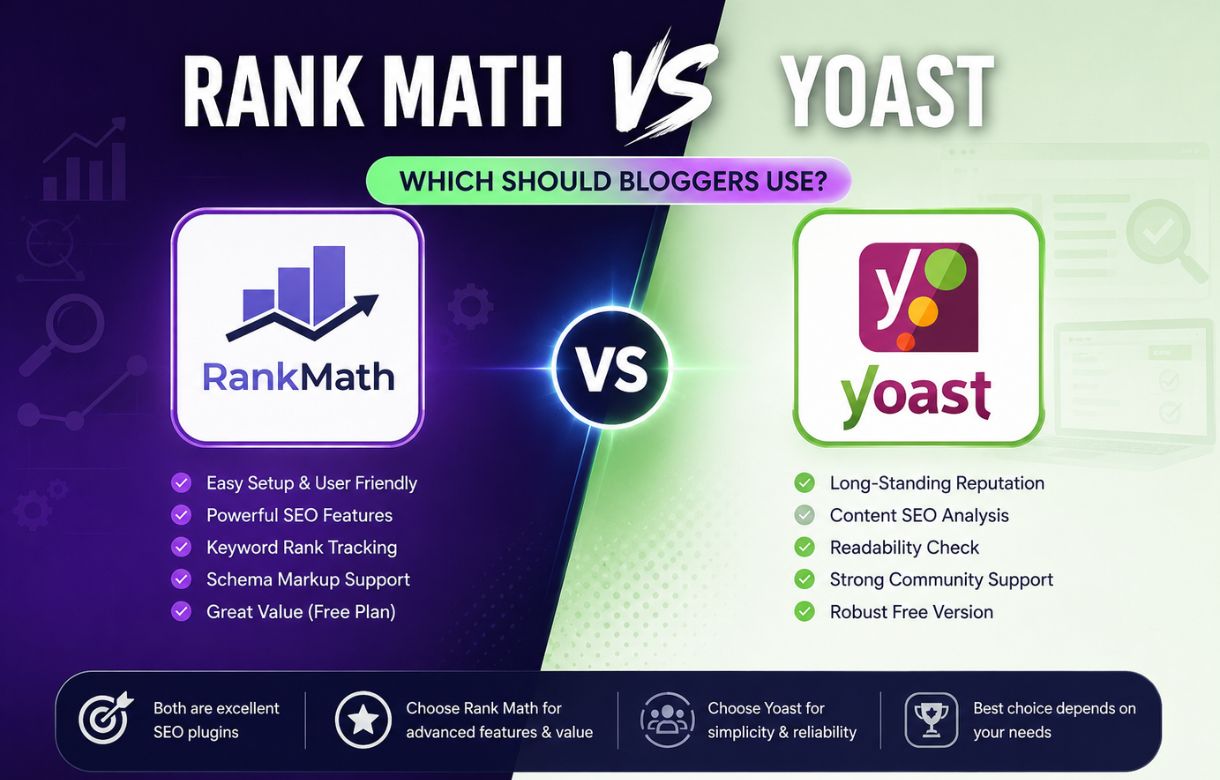
The core difference isn’t features — both plugins do the essentials well: titles, meta descriptions, sitemaps, schema, readability checks. The real difference is what’s free versus what’s locked behind a paywall, and how much the interface gets in your way while you write.
Rank Math packs more advanced features into its free tier — multiple focus keywords, more schema types, and a built-in redirection manager, all without upgrading. Yoast keeps more of that behind Yoast Premium, but its free version has had more time to mature, and its readability analysis has historically felt a bit more refined.
Which Plugin Gives You More for Free?
Rank Math, clearly. If you’re a solo blogger watching your budget, this is the single biggest practical difference. Features Yoast charges for in its Premium tier — like multiple keyword targeting per post and internal linking suggestions — are available in Rank Math’s free version.
That said, “more free features” doesn’t automatically mean “better plugin.” It just means Rank Math’s free tier is more generous, which matters most to bloggers who aren’t ready to pay for an SEO plugin yet.
Which Plugin Is Easier to Set Up?
Rank Math’s setup wizard is faster and more opinionated — it makes more decisions for you upfront, which is good if you want to get moving quickly, but less good if you want full control from the first screen. Yoast’s setup process asks more questions along the way, which takes longer but leaves you with a better understanding of what each setting actually does.
If you’re a complete beginner, I’d lean toward Yoast for the setup experience alone. If you’ve configured an SEO plugin before and just want to move fast, Rank Math’s wizard won’t slow you down.
Which Plugin Has Better Content Analysis?
This is genuinely close, and I don’t think either one is dramatically better. Yoast’s readability checks (sentence length, passive voice, transition words) feel slightly more mature, likely because it’s been refining that feature for longer. Rank Math’s content analysis has caught up a lot in recent updates and now covers similar ground.
Neither one should be treated as gospel. I use both as a rough guide, not a strict rulebook — chasing a perfect green light in either plugin can lead to unnatural, keyword-stuffed writing if you’re not careful.
Does Switching Plugins Hurt Your SEO?
If you’re considering switching from one to the other on an existing site, this is the real question, and the honest answer is: it can, if you’re not careful. Both plugins store your meta titles, descriptions, and schema data in slightly different ways. Switching without a proper migration step can wipe out metadata you’ve already set on older posts.
Both plugins offer built-in import tools for migrating from the other (Rank Math has a dedicated “Yoast importer,” and Yoast has similar tooling in reverse). I’d always run a full site backup before switching, and spot-check a handful of your top posts afterward to confirm titles and meta descriptions carried over correctly.
Which One Do I Actually Recommend?
For most bloggers starting fresh, I’d lean toward Rank Math, mainly because of how much you get in the free version. If you’re budget-conscious and don’t want to pay for Premium just to unlock basic features, that alone can be the deciding factor.
But if you’re a complete beginner who wants a slower, more guided setup experience, Yoast is still a very solid choice; you won’t lose meaningful SEO performance by picking it. The truth most “which plugin is best” posts won’t tell you: once configured correctly, both plugins get you to essentially the same technical SEO outcome. The plugin matters less than whether you actually understand and apply the settings, which is why I wrote dedicated guides for both.
Frequently Asked Questions
Can I use Rank Math and Yoast at the same time?
No, you shouldn’t. Both plugins try to control the same meta tags, sitemaps, and schema output, and running them together usually causes conflicts or duplicate SEO data. Deactivate one fully before activating the other.
Is Rank Math or Yoast better for beginners?
Yoast’s setup process is more guided and explains more along the way, which can help true beginners understand what each setting does. Rank Math is faster to configure if you already understand SEO basics.
Does Rank Math or Yoast affect site speed?
Neither plugin causes a meaningful, noticeable slowdown on a typical blog. If your site feels slow, hosting, image sizes, or a heavy page builder are far more likely culprits than either SEO plugin.
Do I need the paid version of either plugin?
Not to start. Both free versions cover everything most bloggers need: titles, meta, sitemaps, and basic schema. I’d only consider Premium once you’re actively using advanced features like multiple keyword tracking or internal link suggestions at scale.