Every SEO professional has been stuck in the same spot. You find a fix that matters — a missing canonical tag, a redirect chain bleeding link equity, an X-Robots-Tag left on a staging subdomain that Google somehow found anyway. The fix itself takes ten minutes to write. Getting it live takes weeks, because it has to go through a developer queue, a sprint cycle, and a QA pass on a CMS you don’t control.
Edge SEO exists to close that gap. It’s not a new ranking factor, and it’s not a shortcut around good technical SEO. It’s a different place to make the changes you already know need to happen.
What Does Edge SEO Actually Mean?
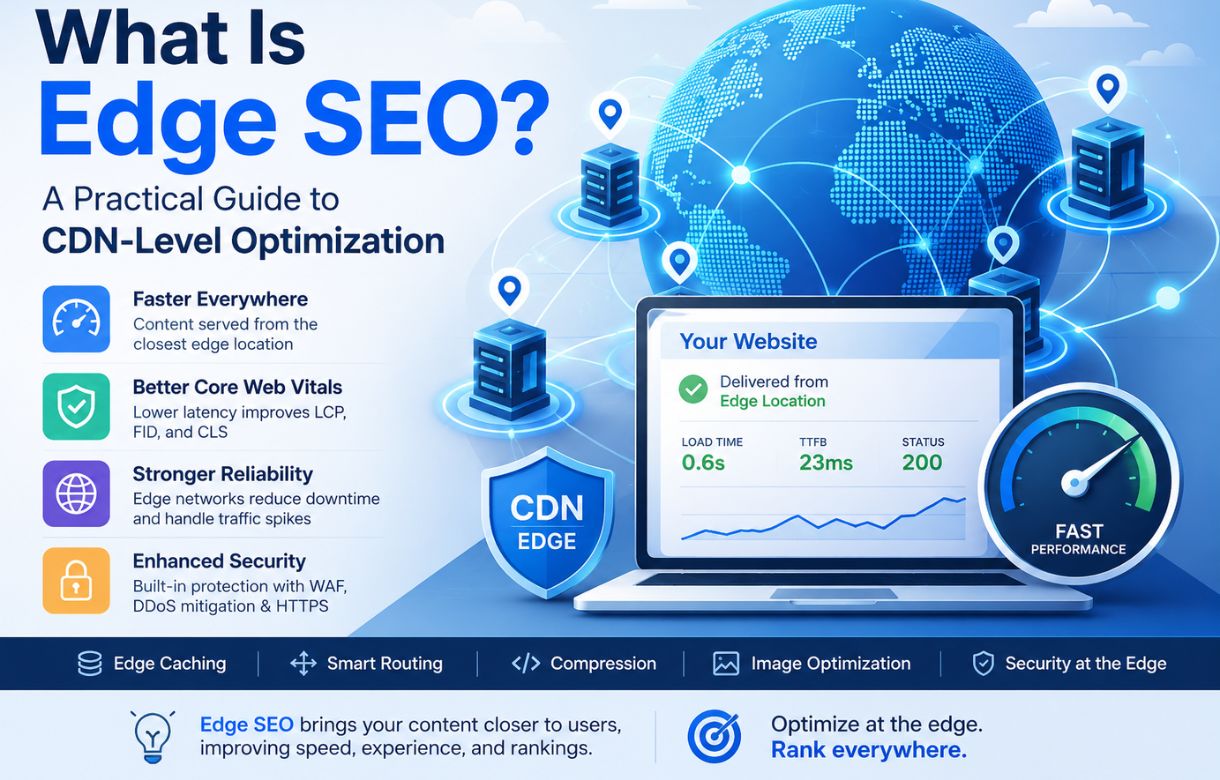
Edge SEO is the practice of applying technical SEO changes at the CDN layer instead of at the origin server or CMS. The “edge” refers to the network of servers — Cloudflare alone runs more than 300 of them worldwide — that sit between a visitor’s browser and your actual hosting environment. Normally these servers just cache and forward requests. With platforms like Cloudflare Workers or Vercel Edge Middleware, you can run a small script at that layer that intercepts the request or response and modifies it before it ever reaches your origin.
In plain terms: instead of editing your WordPress theme or waiting on a developer to touch the codebase, you write a short script, deploy it to the CDN, and the change is live globally in under a minute. No CMS login required. No origin server touched at all.
How Is Edge SEO Different From Regular Technical SEO?
The underlying SEO principles don’t change. A canonical tag is still a canonical tag. A 301 redirect still passes the same signals it always has. What changes is the deployment mechanism.
Traditional technical SEO fixes live inside your site’s codebase, so they inherit every constraint of that codebase — legacy plugins, a frozen CMS, a dev team with other priorities. Edge SEO fixes live in a separate layer that you can update independently, which is precisely why agencies and in-house teams have started reaching for it on sites where the CMS is the bottleneck rather than the strategy.
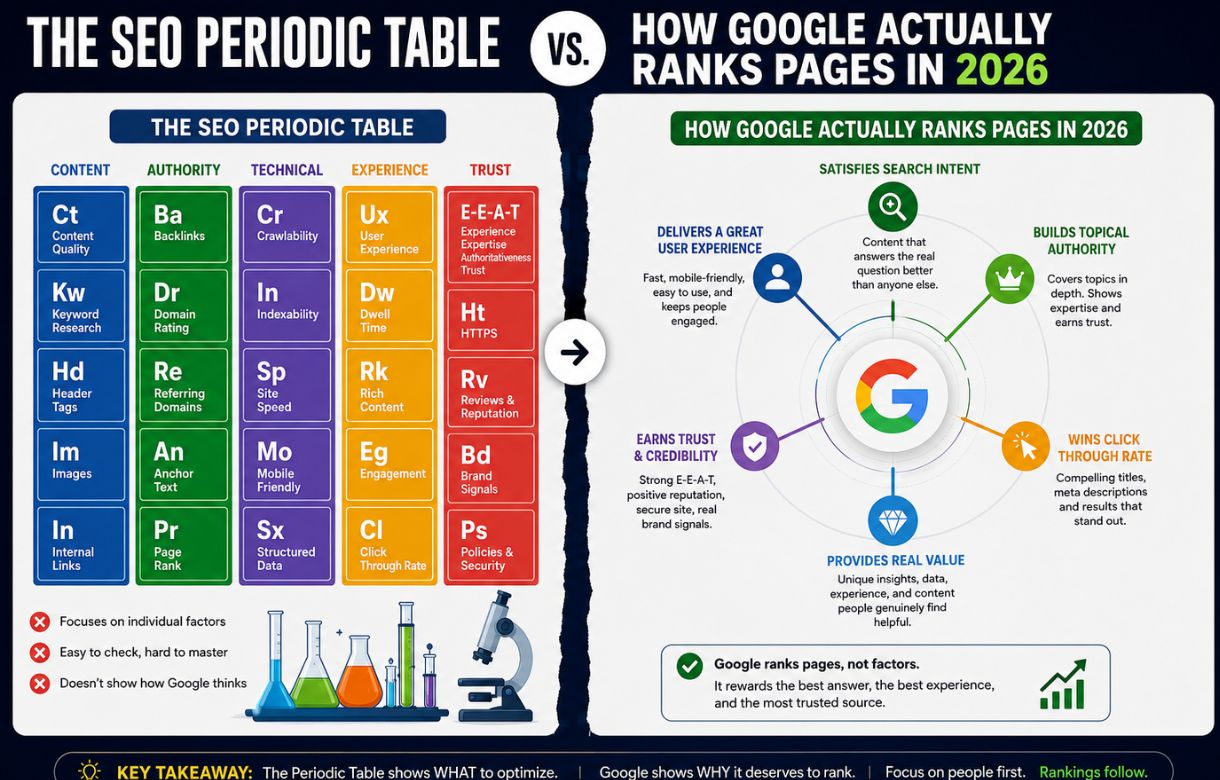
It’s worth being honest about what this actually solves: it’s a deployment speed problem, not a strategy problem. If your technical SEO plan is wrong, doing it faster at the edge doesn’t fix that. Edge SEO is also just one entry in a much bigger list of ranking factors — it sits on the technical health side of things, alongside the content, links, and trust signals covered in a broader look at how ranking factors actually stack up in 2026.
What Can You Actually Fix at the Edge?
The use cases that come up most in real implementations are fairly narrow and mechanical, which is part of the appeal — they’re low-risk, high-leverage changes:
Canonical tag correction across large sections of a site, without editing templates. Injecting or rewriting hreflang tags based on a visitor’s detected region. Managing large batches of redirects — some implementations handle well over 10,000 rules through a CDN’s key-value store rather than an .htaccess file nobody wants to touch. Adding or fixing security and indexation headers like X-Robots-Tag on environments that shouldn’t be indexed. Injecting structured data (JSON-LD) dynamically for pages where the CMS doesn’t support it natively. Managing how AI crawlers and scrapers are allowed to access the site, which has become a more common edge SEO task as generative search tools proliferate — a shift that’s also reshaping what actually gets an article cited or ranked in the first place.
None of this replaces content strategy, link building, or on-page optimization. It’s infrastructure work that happens to affect crawlability and indexation.
Does Edge SEO Actually Affect Rankings?
Indirectly, and in one specific way worth naming clearly: Time to First Byte. Core Web Vitals include page speed signals, and serving requests from a nearby edge location instead of a single distant origin server can cut TTFB dramatically for visitors far from your hosting region. That’s a real, measurable technical improvement.
But this is where some of the marketing around edge SEO gets ahead of itself. A faster TTFB is a page experience improvement, not a guaranteed ranking boost, and it won’t rescue a page with weak content or no topical relevance. Treat edge SEO as an accelerant for fixes you’ve already validated are worth making — not as a ranking hack in its own right.
Which Platforms Support This?
Cloudflare Workers is the platform most commonly associated with edge SEO, largely because of its scale and because Cloudflare already sits in front of a huge share of the web as a CDN. Vercel’s Edge Middleware serves a similar role for sites built on Next.js, running logic before routing or rendering happens. Fastly Compute and Lambda@Edge (AWS) are the other names that come up, generally in larger enterprise stacks.
For a WordPress-based site, Cloudflare is the more common entry point, since most sites already sit behind some CDN and adding a Worker doesn’t require touching the WordPress install itself.
Key Facts — Edge SEO
Deploying SEO Fixes at the CDN Layer
What changes, how fast, and where the real risk sits when the fix lives outside your CMS.
Global edge locations where a CDN like Cloudflare can run SEO logic before a request reaches the origin.
Typical time for an edge SEO fix to go live worldwide — no CMS login or developer queue involved.
Possible TTFB reduction for globally distributed traffic when serving from the edge instead of one origin.
Redirect rules manageable through a CDN key-value store — well past what a manual .htaccess file can handle cleanly.
CMS logins or codebase edits required — the whole point of running fixes at the network layer instead.
A broken rule deploys everywhere just as fast as a fix does. Stage rollouts — don’t push straight to 100% of traffic.
Edge SEO speeds up deployment of fixes you’ve already validated. It doesn’t replace content strategy, link building, or on-page work — and a faster TTFB won’t rescue a page with weak content.
What Are the Real Risks?
This is the part that gets underplayed. Edge scripts run outside your CMS, which means outside your CMS’s usual safety nets too. A malformed redirect rule pushed live at the edge can misdirect an entire section of a site in seconds — at global scale, instantly, with no staging environment in between unless you build one yourself.
Version control and rollback discipline matter more here, not less, because the whole appeal of edge SEO is speed of deployment. Testing changes on a small percentage of traffic before a full rollout, and keeping a clear log of what’s been deployed and when, isn’t optional overhead — it’s the thing that keeps a fast deployment process from becoming a fast way to break your site.
There’s also a coordination risk worth naming: when technical SEO fixes live at the edge instead of in the codebase, they become invisible to anyone auditing the CMS directly. A developer reviewing the WordPress install six months from now won’t see the redirect logic running upstream of it. That’s a documentation problem as much as a technical one.
Is Edge SEO Worth It for Smaller Sites?
For a lot of independent sites and small businesses, honestly — not really, or at least not yet. The clearest use cases involve either a CMS that’s genuinely hard to change (enterprise platforms, legacy systems, agencies managing dozens of client sites) or issues at a scale where manual fixes aren’t practical, like tens of thousands of redirect rules.
If you have direct access to your theme files and a CMS that lets you edit a canonical tag in under a minute, you don’t need an edge layer to solve a problem you can already solve directly. Edge SEO earns its complexity when the alternative is genuinely slower, not as a default first move. If you’re still working through the fundamentals, this is worth filing away for later rather than acting on now — it’s a much later stop than anything on a realistic SEO roadmap for someone starting from zero.
How Do You Get Started?
The practical path is small and reversible. Pick one narrow, well-understood fix — a set of duplicate canonical tags, a batch of redirects, a missing header — rather than trying to migrate broad site logic to the edge on day one. Deploy it behind a CDN you already control, test it against a small slice of traffic, and confirm with your crawler and log files that it’s behaving the way you expect before rolling it out further.
Edge SEO rewards teams that already have strong technical SEO fundamentals and hit a deployment bottleneck. It doesn’t substitute for those fundamentals.
Frequently Asked Questions
Is edge SEO the same as CDN caching?
No. Caching just stores and serves existing content faster. Edge SEO involves running scripts at that same network layer to actively modify headers, redirects, or markup before a request reaches the origin server.
Do I need to know how to code to implement edge SEO?
Some scripting knowledge is generally required, since most edge SEO changes are written as small JavaScript functions. Agencies without in-house development capacity typically bring in a developer for the initial implementation, even if ongoing rule changes are simpler.
Can edge SEO hurt my rankings if something goes wrong?
Yes, and quickly. Because changes deploy globally within seconds, a mistake in redirect logic or a canonical rule can affect crawling and indexation across the whole site before anyone notices. This is why staged rollouts and monitoring matter more here than in typical CMS-based changes.
What’s the difference between edge SEO and a regular CDN like Cloudflare?
Most sites already use a CDN just for caching and DDoS protection, which doesn’t touch SEO at all. Edge SEO specifically refers to using that CDN’s compute layer — like Cloudflare Workers — to run logic that changes how pages are served to search engines and users.